 Iceland Fishing Tours
Trout Fishing in Iceland: Brown Trout, Char and Sea Trout
Iceland anglers landed 46,962 brown trout and 29,120 Arctic char in the 2025 season, and the brown trout catch keeps rising while char numbers fall. Trout fishing in Iceland splits into trophy browns in Þingvallavatn, dry-fly rivers in the north, highland char lakes and south-coast sea-trout runs. This guide sets out the waters, seasons, rules and permit prices, then points you to the guided days you can actually book.
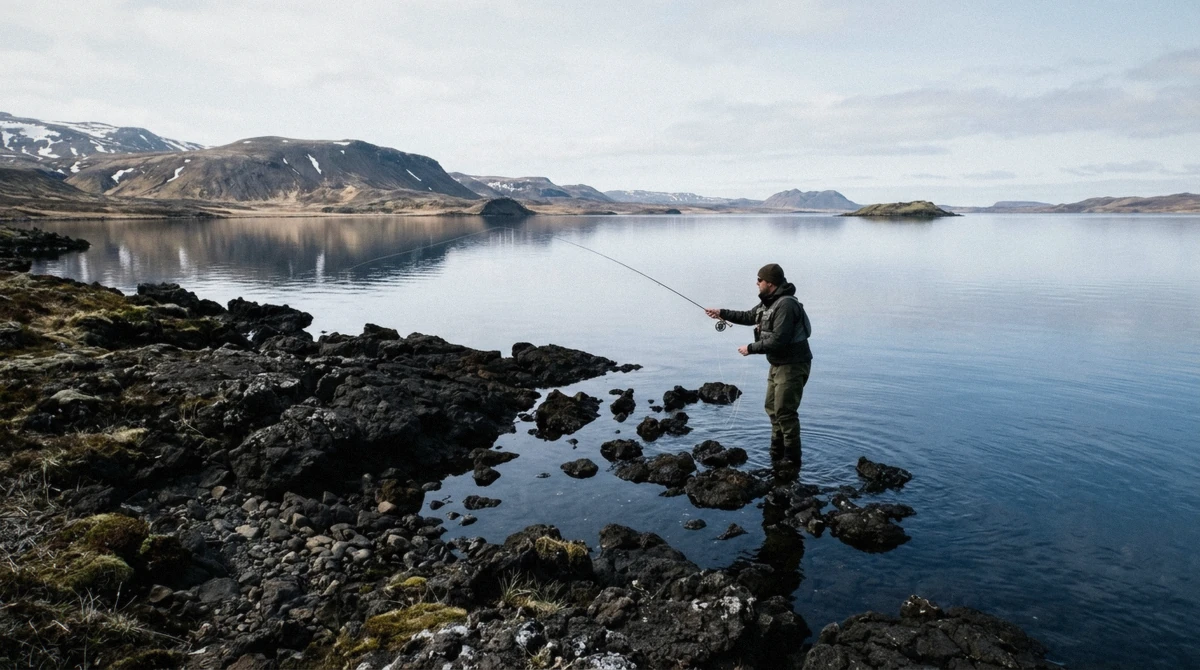
Quick answer Top waters by catch, trophy lake sizes and the cheapest way on the water
By 2025 rod catch the best trout water is Veiðivötn with 13,141 brown trout and 10,301 Arctic char, ahead of Fremri Laxá á Ásum and Laxá í Mývatnssveit. For size rather than numbers, Þingvallavatn browns average about 8 lb and reach 30-36 lb, with many 20-pounders landed between mid-May and mid-June. A lake day starts at $21 (2,500 ISK) at Þingvellir or $81 (9,900 ISK) for the 2026 Fishing Card, while north-country trout rivers run from 17,200 ISK per half day to 72,500 ISK per rod per day.
Key takeaways
- Brown trout season peaks June to August, and July to August is best on the Laxá rivers
- Sea trout run April to the end of September, with April to June and September the strongest windows
- The lake and river fishing day from Reykjavik includes permits, gear and transport for brown trout and char
- In winter you can still catch char and brown trout through the ice on the Akureyri ice fishing tour
- Gear used abroad needs a disinfection certificate before you touch freshwater, see the fishing licence guide
Where The Trout Are
Two species dominate the freshwater catch, brown trout and Arctic char, and the official statistics name the rivers and lakes that produce most fish.
The 2025 Catch In Numbers
Iceland's Marine and Freshwater Research Institute logs rod catch for every water. The 2025 report recorded 46,962 brown trout, of which 43.5% were released, and 29,120 Arctic char, of which 19.7% were released. Kept browns alone weighed 30,968 kg.
The trend matters for planning: char catches are falling while brown trout catches rise. Veiðivötn in the highlands leads both species by a wide margin, and the north-country Laxá system fills most of the remaining top ten. The table shows the leading waters for each species from the 2025 report, so you can match a destination to the fish you want.
| Water | Brown trout 2025 | Arctic char 2025 |
|---|---|---|
| Veiðivötn | 13,141 | 10,301 |
| Fremri Laxá á Ásum | 2,888 | not stated |
| Laxá í Mývatnssveit | 2,678 | not stated |
| Hlíðarvatn | not stated | 2,458 |
| Laxá í Aðaldal | 1,883 | not stated |
| Arnarvatn stóra and Austurá | 1,623 | 1,556 |
How To Read The Rankings
High catch numbers usually mean accessible water with many rods, not big fish. Veiðivötn allows up to 100 rods a day with no quota, which partly explains its total. A small beat like Múlatorfa on the Laxá í Aðaldal reports only its best beats at 400-800 trout per summer, but the fish average 1-1.5 kg and many run 2-3 kg. If you want numbers, fish the big lakes and the highland crater waters. If you want a larger average fish, the Laxá in Laxárdalur reports just over 70% of its catch over 50 cm and 20% over 60 cm. Trophy hunters go to Þingvallavatn, covered next, where fish are measured in pounds rather than centimetres.
Source: Hafrannsóknastofnun, Lax- og silungsveiði 2025, Veiðiheimar, The Trout Bandit.
Þingvallavatn: The Trophy Brown Trout Lake
Iceland's largest lake sits in a rift valley 40 minutes from Reykjavik and grows the biggest brown trout in the country.
The Fish And The Water
Brown trout in Þingvallavatn average about 8 lb and reach 30-36 lb, with many 20-pounders landed between mid-May and mid-June. Three of Iceland's five freshwater species live here. The catchment is 90% underground and spring water enters the lake at 37-39 F, which keeps food available year round and fuels the growth. Local outfitters fish it with 6-9 weight rods, leaders of at least 12 lb and a floating line most of the time, with intermediate or sink-tip lines for deeper work. Streamers are the first choice of fly. One outfitter holds six exclusive beats on the lake with 2 to 6 rods each and guides up to 10 hours a day from a 9:00 pick-up.
Source: Fishing with Larry, Þingvellir National Park.
Permits, Seasons And Rules
The national park beats run 20 April to 15 September. A day permit costs $21 (2,500 ISK) per rod, sold at the Leirar service centre and online, and 2026 Fishing Card holders may also fish if the card is displayed in the car's front window. Fly only applies from 20 April to 31 May with all brown trout released. From 1 June you may use fly, worm or lure, and fishing is from the shore only because boats and floats are banned. Tagged brown trout must be released, with the tag number, length, sex, location and date sent to the park's research contact or given to rangers. Ólafsdráttur closes 1 July to 1 September to protect spawning char. Children fish free with a permitted adult.
Source: Þingvellir National Park.
Private Beats And The Release Debate
Not every metre of the lake is park permit water. Kárastaðir fishes 20 April to 15 September at 5,900-24,900 ISK a full day depending on rod, flies and spinners, catch and release with 4-7 rods, and fish over 20 lb are caught there. The park permit and Fishing Card are not valid on that beat. At Kaldárhöfði on the south shore the season starts 1 May, costs 5,900-11,990 ISK per rod per day and allows spin fishing, the only Fish Partner beat that does. The ION area runs 55,000-145,000 ISK a rod per day, fly only, four rods. One point to settle before you go: sources differ on the lake's kill rules. Guide to Iceland calls Þingvallavatn catch and release only, while the park itself allows worm and lure fishing from 1 June and requires release of tagged and early-season browns. Confirm with your permit seller before keeping a fish.
Source: Veiðiheimar, Guide to Iceland.
Villingavatn: The Small Lake Trophy Option
Þingvallavatn is not the only place the big lake's browns turn up. A smaller water next to it fishes on a much tighter leash.
A Four Rod Lake With Big Fish
Villingavatn is a small lake joined to Þingvallavatn by a stream, so fish from the big lake can enter it. That link is why it holds trophy browns in a setting that feels private. The rules are strict. Only four rods fish it at a time, it is fly only, and every fish is released. One outfitter's write-up describes browns of 24-27 inches cruising the shoreline in plain view. The same account says stealth matters more than distance. You do not wade. You walk the bank and cast along the edges and the weed lines, placing the fly where a cruising fish will meet it.
What works is specific. Streamers that imitate sticklebacks took the best fish, and hoppers and mouse patterns also drew takes. A guide helps here because the beat is so small that one clumsy approach can spook the shoreline for the rest of the morning.
Source: Mossy Oak.
The Villingavatnsárós Mouth Beat
Where the lake meets its outflow stream sits the Villingavatnsárós beat, a two-rod stretch. It suits a different style of day. Expect some hiking to reach the water, and expect to switch between small nymphs, dry flies and streamers as the light and the fish change. Two rods means you share the water with at most one other angler. Guided packages on Þingvallavatn include this beat among their exclusive waters.
Source: Fishing with Larry, Mossy Oak.
The Laxá Rivers Of The North
The Laxá system in the Mývatn district and Aðaldalur is Iceland's classic brown trout water, with about 58 km of trout fishing and a long dry-fly season.
Laxá Í Mývatnssveit
This beat runs 29 May to 25 August for 14 rods at 65,200-72,500 ISK a rod per day, flies only. There are 8 beats with one rested each day. You may keep two brown trout per shift and must release fish under 35 cm and over 60 cm. In 2025 anglers caught 2,678 browns here, and fish around 70 cm turn up regularly. The terrain is part of the experience. The river fishes pools, pockets, lava shelves and backwaters, and reaching the water means a hike over tussock grass with no path. Downstream, the Laxá in Laxárdalur is wadable and offers easier dry-fly water with bigger trout, and July and August are the better months across the system. Full fly-tackle advice lives on our fly fishing guide.
Source: Veiðiheimar, The Trout Bandit.
Laxárdalur And Aðaldal
The Laxá in Laxárdalur fishes 31 May to 12 August for 12 rods, catch and release, at 46,300-58,200 ISK a rod per day. Just over 70% of the recent catch measures over 50 cm and 20% over 60 cm, and one UK outfitter puts the average at about 4 lb with many 5-7 lb fish. Further down the same river, the Aðaldal trout beats suit shorter stays. Múlatorfa runs 20 May to 20 September with 3 rods, 4 fish per rod per day and 17,200 ISK per half day, with average fish of 1-1.5 kg and many at 2-3 kg. Staðartorfa (1 May to 20 September) allows two trout per shift, Syðra Fjall opens as early as 1 April with 2 rods, and Hraun runs 1 June to 20 September with 4 rods and 2 trout per rod per day. Rod numbers stay low, so book these beats early. The river also holds salmon, covered on our salmon fishing page.
Source: Veiðiheimar, Veiðiheimar, Múlatorfa.
Midges, Weather And Side Trips In The North
The northern Laxá country is wild water, and it comes with conditions that decide how comfortable your day is.
Midges And The Wind
The Mývatn district is named for its midges. In summer they can be heavy along the river, and a head net is worth packing even if you hope not to use it. Wind drives the midges off, so a breezy day is a better day for your face, though not always for your casting. Plan your evening session around calm air and expect the bugs to be thickest then.
Weather in the north changes fast. One guide describes four seasons in a single day, with sun, rain and cold wind all passing through. Pack a rain shell and warm layers even in July, and keep a dry spare layer in the car. Arctic Circle weather rarely ruins a trip, but it does reward the angler who carries a hat, gloves and a wind-proof jacket.
Source: The Trout Bandit.
Something Else For The Family
Trout anglers often travel with people who would rather not stand in a river. The north has options. From Húsavík you can take a whale-watching cruise of about 3 hours, and a puffin bluff lies roughly 20 minutes north of the town. Both fit around a fishing schedule. If you want a salt water day of your own instead, see our guide to sea fishing in Iceland or the Hauganes whale watching and sea angling trip near Akureyri.
Source: The Trout Bandit.
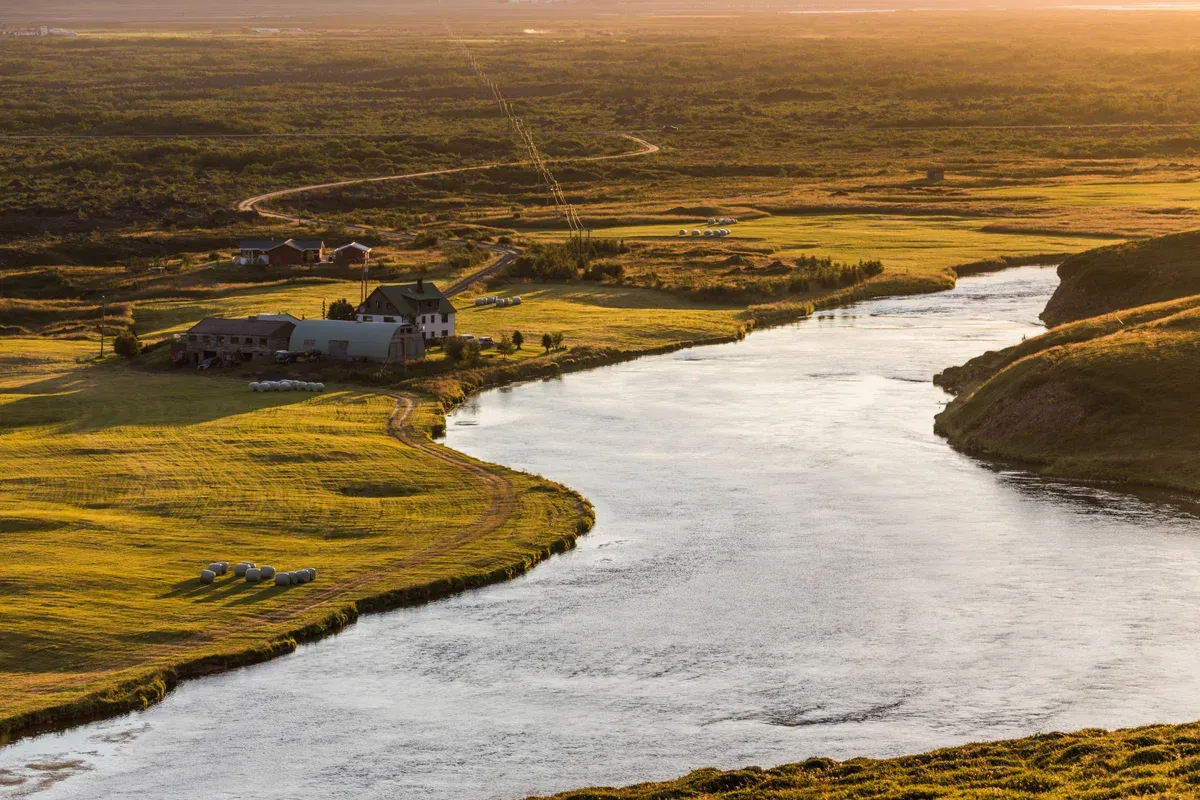
Aðaldalur in North Iceland, the valley of the Laxá í Aðaldal trout beats. Photo: Markus Trienke, CC BY-SA 2.0, via Wikimedia Commons
Veiðivötn And The Highland Waters
The highland crater lakes and rivers deliver the largest raw catch in Iceland and a real wilderness setting that needs a 4x4.
Veiðivötn
Veiðivötn runs 18 June to 20 August at 13,500-16,000 ISK a day, with flies, worms and spinners all allowed, no bag quota and up to 100 rods on the water. It is the top trout and char water in the country, with 13,141 brown trout and 10,301 Arctic char recorded in 2025. Access is by SUV only and there is no fuel on site, so Hrauneyjar is the last fill-up point. The lake district was formed by volcanic eruptions and the fishing is spread across dozens of small crater lakes, which spreads out even a hundred rods. For a single-rod visitor the cheap daily price and generous limits make this the easiest high-volume trout day in Iceland, provided you can reach it.
Source: Veiðiheimar, Hafrannsóknastofnun.
Kaldakvísl, Tungnaá And Other Highland Water
Beyond Veiðivötn, the highland rivers Kaldakvísl and Tungnaá are fished from a lodge. Arctic char there average 3-4 lb with fish to 7 lb, brown trout run 2-5 lb with the biggest around 10 lb, and one outfitter credits Tungnaá browns up to 12 lb. Tungnaá turned clear after a hydropower plant was built in 2013 and now fishes well. Take 4-6 weight rods and expect 4x4 access for the drive in. Fremri Laxá á Ásum, second only to Veiðivötn in the 2025 brown trout table with 2,888 fish, is another north-country favourite, as are Vatnsdalsá and Giljá with 2,178 browns between them. Highland char also headline the winter option, where char and brown trout come through holes drilled in a frozen lake on the Akureyri ice fishing tour, and the broader picture of every species is on our Iceland fishing tours.
Source: Hatch, Where Wise Men Fish.
Getting To The Water: Drive Times And Access
Where you land and where you fish can be hours apart. Drive times decide how many hours you really spend with a rod in hand.
Near Reykjavik
Þingvallavatn sits about 40 minutes from Reykjavik, which is why it works as a day trip. Two char and trout rivers on the day-tour list of an Iceland outfitter, Hólaá and Fullsæll, lie about 60 minutes from the capital. If you stay at a lake lodge, one outfitter puts its hotel at roughly 1.5 hours from Keflavik Airport. Short transfers like these leave a full day for fishing. The lake and river fishing day from Reykjavik is built around exactly this short radius.
Source: Fishing with Larry, Iceland Outfitters.
The North And The Highlands
The Laxá country is a long way from the airport. One trip report counts about 6 hours by road from Keflavik to the northern river, after a flight of 6 hours from the US East Coast. A domestic flight to Akureyri cuts the final leg to about 1 hour from the river, but it depends on weather, so do not tie it to a tight connection.
The highlands are a different problem. The Where Wise Men Fish lodge trips need a 4x4 for the transfer from Reykjavik or the airport, and a fair amount of walking is expected once you are on the river. Veiðivötn needs an SUV, as covered above. Book a guided transfer if you are not used to F-roads.
Source: The Trout Bandit, Where Wise Men Fish.
Sea Trout On The South Coast
Sea-run brown trout enter the south-coast rivers from the ocean in spring and autumn.
The Rivers And Their Windows
Sea trout run April to the end of September, with the best fishing in April, May, June and September by one guide, and late August to early October by another. Battle Hill Lodge, which guides three of these rivers, splits its programme accordingly: spring 16 April to 16 May on Vatnamót and Geirlandsá only, then autumn 27 August to 20 October rotating all three, with sea runs arriving from late July. Vatnamót, where the Skaftá meets Fossálar, Geirlandsá and Hörgsá, averages 1,500 sea-run browns a year for just 5 rods a day, and fish of 20 lb and more are not uncommon.
The table lists the south-coast rivers by 2025 brown trout catch. Note that release rates vary widely between them.
| River | Brown trout 2025 | Season |
|---|---|---|
| Skaftá (Hólma beat) | 1,306 | 10 July to 5 September |
| Geirlandsá (99% released) | 1,131 | Spring and autumn windows |
| Tungulækur | 936 | Mainly spring and autumn |
| Tungufljót | 655 | 24 June to 1 October |
| Eldvatn í Meðallandi | 615 | 1 April to 10 October |
| Grenlækur | 300 | About 30 km of tidal access |
Booking And River Rules
Rules differ river by river, so read the fine print. On Eldvatn í Meðallandi, open 1 April to 10 October for up to 5 rods per session at 25,000-40,000 ISK a rod per day, sea trout must be released and only salmon may be taken, all flies only. The Skaftá Hólma beat sells 6 rods as one package at 10,000-15,000 ISK per full day. On Tungufljót, 24 June to 1 October for up to 4 rods, the limit is 2 fish per rod per day and its price and fly-only status are not confirmed, so confirm with the booking office. Litlaá in Kelduhverfi in the north is a useful sea-trout alternative, open 1 April to 10 October at 45,000 ISK a rod per day, fly only and catch and release, with runs in April to June and September. The Battle Hill Lodge programme is fly only and catch and release throughout, with 2 anglers per guide, from $7,500 for 6 nights.
Source: Veiðiheimar, Eldvatn, Fishing with Larry, Battle Hill, Guide to Iceland.
Day Rivers And Spring Sea Trout Near Reykjavik
A short list of waters within about an hour of Reykjavik, plus one river that fishes for sea trout when most others are still closed.
Char And Trout Rivers For A Day
If you want a river rather than the big lake, one Iceland outfitter lists several day options. Hólaá is called one of the best char rivers in South Iceland and sits about 60 minutes from Reykjavik. Fullsæll in South Iceland has newly opened to the public as day-tour water at the same distance. Djúpá is a small spring-fed char river at Eyvindartunga that suits all levels.
There is also a private river day for char and brown trout. It is described as a fit for beginners and families and sits about 1 hour from the capital. That makes it the natural choice for a first Icelandic trout, before you commit to a northern beat. For a ready-made version with permits included, see the lake and river fishing tour.
Source: Iceland Outfitters.
West Rangá In April And May
The West Rangá is known mainly for salmon, so its trout window is easy to miss. One outfitter lists sea trout fishing there in April and May, a spring slot before the salmon season gets going. It pairs well with the spring windows on the south-coast rivers in our sea trout section. For the salmon side of the same river, read our salmon fishing in Iceland guide.
Source: Iceland Outfitters.
Arctic Char Lakes And The Fishing Card
Arctic char are easy to reach on a cheap day permit, especially with the national Fishing Card.
Where The Char Are
Veiðivötn tops the char table with 10,301 fish in 2025, followed by Hlíðarvatn with 2,458, then Arnarvatn stóra and Austurá, Fljótaá and the lakes south of Tungnaá. Char also share Þingvallavatn, where Ólafsdráttur closes in July and August to protect the spawning run, and Kaldárhöfði on the same lake is rated good for char from June to August. For lake fishing on your own, a 5 weight rod is enough for both char and browns, and spinners work well for char. Skjálftavatn near Keldunes holds large char and brown trout and recorded 1,252 trout in 2025 alongside Litlaá. On the highland rivers Kaldakvísl and Tungnaá, char average 3-4 lb and reach 7 lb.
Source: Hafrannsóknastofnun, Iceland Travel Guide, Hatch.
The Veiðikortið Fishing Card
The Fishing Card is the cheapest way to fish trout lakes across Iceland. The 2026 eCard costs $81 (9,900 ISK) and covers a season of lake fishing, though not rivers. The card lists 36 areas in four regions, while the shop page states 38 lakes, a count that differs by year. The South region holds 11, including Elliðavatn, Þingvallavatn, Úlfljótsvatn, Kleifarvatn and Vífilsstaðavatn, the North 8 including Ljósavatn and Svínavatn, the West 12 including Hítarvatn and Hreðavatn, and the East 5 including Urriðavatn. Most lakes open 1 May and close 30 September, some all year. At each lake you must register with the landowner or show the card to the fishing guard. Children under 14 fish free with a card holder. For every permit type, river rules and the disinfection requirement, see our fishing licence guide.
Source: Veiðikortið, Veiðikortið web shop, nat.is.
What To Fish With: Flies, Leaders And Tactics
Tackle varies by water. These are the details that change what you tie on and how you present it.
Flies By Water
On Þingvallavatn the usual opening move is a streamer, with nymphs and dry flies saved for the right conditions. One guest on a guided trip fished deep holes with tippets of 25 feet and landed six fish between 5 and 21 lb. On Villingavatn, stickleback patterns did best, with hoppers and mouse patterns also catching fish.
In the highlands, a 4-6 weight single-hand rod covers nymphs, dry flies and streamers, and you choose by season and conditions. Nymphs and dries are more useful on clear, lower water. Streamers help when you need to cover ground.
Source: Fishing with Larry, Mossy Oak, Where Wise Men Fish.
Knots, Leaders And Rental Gear
On the Laxá, browns punish weak knots and damaged leaders and tippet. Check the line after every snag and retie rather than hoping. Laxárdalur is dry-fly water, so a fine, well-tied tippet matters there more than anywhere.
If you do not want to carry a rod bag, one outfitter rents a rod, reel, line, waders and boots for $110-120 per person per day. Flies are not supplied, and any you bring must be new or unused, which ties back to the disinfection rule in our fishing licence guide. For more on fly-fishing methods, see the fly fishing in Iceland page.
Source: The Trout Bandit, Fishing with Larry.
Permits, Prices And Day Costs
Freshwater fishing needs a permit from the rights holder, and every river system sets its own price, rod count and rules.
What A Day Costs
Prices range from a $21 (2,500 ISK) park permit to beats that cost more than a hundred times that. The cheapest access is the lake card at $81 (9,900 ISK) for a full season. Small river beats and park land sit in the middle, and the famous fly-only beats in the north cost the most because rod numbers are capped.
The table compares the published day-permit prices for the main trout waters so you can match a budget to a destination. Multi-day hosted packages, such as the Battle Hill sea-trout programme from $7,500 for 6 nights, are priced separately and sit above anything in this table.
| Water | Price per rod per day | Notes |
|---|---|---|
| Þingvellir park beats | $21 (2,500 ISK) | Fly only to 31 May, shore only |
| Elliðavatn | 3,500 ISK | Reykjavik, no quota, fly, worm or spinner |
| Veiðivötn | 13,500-16,000 ISK | No quota, up to 100 rods |
| Múlatorfa, Laxá í Aðaldal | 17,200 ISK per half day | 3 rods, 4 fish per rod |
| Eldvatn í Meðallandi | 25,000-40,000 ISK | Flies only, sea trout released |
| Litlaá | 45,000 ISK | Fly only, catch and release, 5-7 rods |
| Laxá in Laxárdalur | 46,300-58,200 ISK | 12 rods, catch and release |
| Laxá í Mývatnssveit | 65,200-72,500 ISK | 14 rods, flies only |
| ION area, Þingvallavatn | 55,000-145,000 ISK | 4 rods, fly only |
Rules That Apply Everywhere
All rivers in Iceland are privately held, so access comes only through a beat booking or a permit, never by simply parking and walking in. Any gear that has fished abroad must carry a disinfection certificate before it touches Icelandic freshwater, and that covers rods, reels, hooks, lures and waders. You can have gear disinfected by a vet before you leave home, at Keflavik Airport, or in Iceland by vets and recognised bodies. At Þingvellir the service centre does it for 5,000 ISK, and Battle Hill does it free for its guests. Catches kept or released are generally logged, and on park beats the log is electronic on the research institute's site. A guided day removes most of this paperwork, since permits are included. The bookable guided day for brown trout and Arctic char is the lake and river fishing tour from Reykjavik, a private 8-hour trip through Þingvellir with permits, rods and transport included. If your taste runs to salt water instead, compare the sea fishing tours from Reykjavik.
Source: MAST, Þingvellir National Park, The Fly Shop.
Hosted Trips And Lodge Packages: What A Week Costs
The day-permit table above covers fishing on your own. Guided packages are priced very differently.
Published Package Prices
Hosted trips bundle guides, lodging and permits into one price. The table lists the packages the main outfitters publish so you can compare what a week of fishing costs. Prices are per person and apply to the date range each outfitter quotes.
Check current rates before booking.
| Package | Length | From price | What is included | Guide ratio |
|---|---|---|---|---|
| Þingvallavatn guided (Fishing with Larry) | 4 nights / 4 days | $5,750 per person for 2 anglers, spring from $6,825 | Transfers, private-water licences, meals on fishing days, hotel | Two anglers per guide |
| Highland rivers (Where Wise Men Fish), 2024 rates | 5 days / 5 nights | $6,000 shared, $8,500 single | Lodge full board, river lunch | One guide per 2 rods |
| Þingvallavatn and Highland rivers combo | 5 nights | From $7,500 shared | Combined programme | Guided |
| Battle Hill sea trout | 6 nights | From $7,500 | Guided, fly only, catch and release | Two anglers per guide |
How To Read The Prices
A week at these packages costs far more than the $21 (2,500 ISK) Þingvellir permit, but the comparison is not like for like. The package pays for the beat, the guide, the lodge and the transfers together. On the Highland rivers you fish 9:00-18:00 with a river lunch and a guide for every two rods, and a three-day rate is also quoted for shorter stays. On Þingvallavatn, guiding runs up to 10 hours a day. If you only want access to good water, a day permit plus the lake and river fishing day from Reykjavik is the cheaper route. For the full permit price ladder, see the table above.
Source: Fishing with Larry, Where Wise Men Fish.
Trout Fishing Questions
Where is the best trout fishing in Iceland?
By 2025 rod catch, Veiðivötn leads both species with 13,141 brown trout and 10,301 Arctic char, followed by Fremri Laxá á Ásum with 2,888 browns and Laxá í Mývatnssveit with 2,678. For trophy size rather than numbers, fish Þingvallavatn, where browns average about 8 lb and reach 30-36 lb, with the biggest fish landed between mid-May and mid-June. For sea trout, the south-coast rivers Skaftá, Geirlandsá and Tungulækur top the 2025 table.
Can foreigners fish in Iceland?
Yes. Anyone can buy a permit, and for lakes the simplest route is the 2026 Fishing Card at $81 (9,900 ISK), sold online and at gas stations. Rivers are privately held, so you book a beat or a river permit from the rights holder. The one legal hurdle is disinfection: tackle used abroad must carry a disinfection certificate before it enters Icelandic freshwater.
How much does it cost to fish in Iceland?
Lake fishing starts at $21 (2,500 ISK) a day on the Þingvellir park beats, or $81 (9,900 ISK) for a season Fishing Card. Small river beats run from 17,200 ISK per half day on the Laxá í Aðaldal to 13,500-16,000 ISK a day at Veiðivötn. The famous fly-only beats cost 45,000-72,500 ISK a rod per day, and hosted multi-day sea-trout packages start from $7,500 for 6 nights.
What is the best month for trout fishing?
June to August is the general brown trout season, and July to August is best on the Laxá rivers. On Þingvallavatn the peak for big fish is mid-May to mid-June, when many 20-pounders are landed. Sea trout run April to the end of September, with the strongest windows in April to June and again in September. Highland water such as Veiðivötn opens later, on 18 June.
Do I need a guide for trout fishing in Iceland?
Not on easy water. Park beats and Fishing Card lakes are fished self-guided every day, and a 5 weight rod is enough for lake char and browns. A guide earns its cost on the northern rivers, where access means a hike over tussock grass with no path and each beat has its own rules on rod counts and bag limits. The bookable guided option is a private lake and river day from Reykjavik with permits and gear included.
Can you keep the trout you catch?
It depends on the water. The Þingvellir park beats allow keeping from 1 June, aside from tagged fish, and no quota applies. The Laxá í Mývatnssveit allows two browns per shift and Laxárdalur is catch and release. Veiðivötn has no quota. Most private sea-trout and trophy beats are release only, and on some south-coast rivers release rates reach 99%. Read your permit's rules before keeping any fish.
Is trout fishing possible in winter?
Yes, through the ice. From Akureyri a 3.5-hour ice fishing tour runs to frozen Ljósavatn while the ice holds, where the guide drills the holes and you jig for Arctic char and brown trout with a licence, rods and hot cocoa included. The sea also stays open year round, and some northern sea angling operators sail on request outside the main May to September season, though most trout rivers are frozen or closed.
What flies and rods work for Icelandic trout?
Use a 6-9 weight rod on Þingvallavatn and a 4-6 weight single-hand rod on highland rivers. Streamers are the first fly to try on the big lake, with nymphs and dry flies when conditions allow. On Villingavatn, stickleback patterns, hoppers and mouse patterns all caught fish. Check knots and leaders often on the Laxá, where browns punish weak tippet.
Are midges a problem when fishing in Iceland?
They can be, especially around Mývatn in summer. Lake Mývatn is named for its midges. Wind keeps them down, so a breezy day is easier. Carry a head net, and pack for sudden weather, since the north can shift through four seasons in one day.
Can I rent waders and rods for trout fishing in Iceland?
Yes. One outfitter rents rod, reel, line, waders and boots for $110-120 per person per day. Flies are not included, and any flies you bring must be new or unused. Gear that has fished abroad needs disinfection before it touches Icelandic water.
How long does it take to reach the northern trout rivers?
About 6 hours by road from Keflavik to the northern Laxá, according to one trip report. A flight to Akureyri puts you about 1 hour from the river but depends on weather. Þingvallavatn is only 40 minutes from Reykjavik, and Hólaá and Fullsæll are about 60 minutes away.